
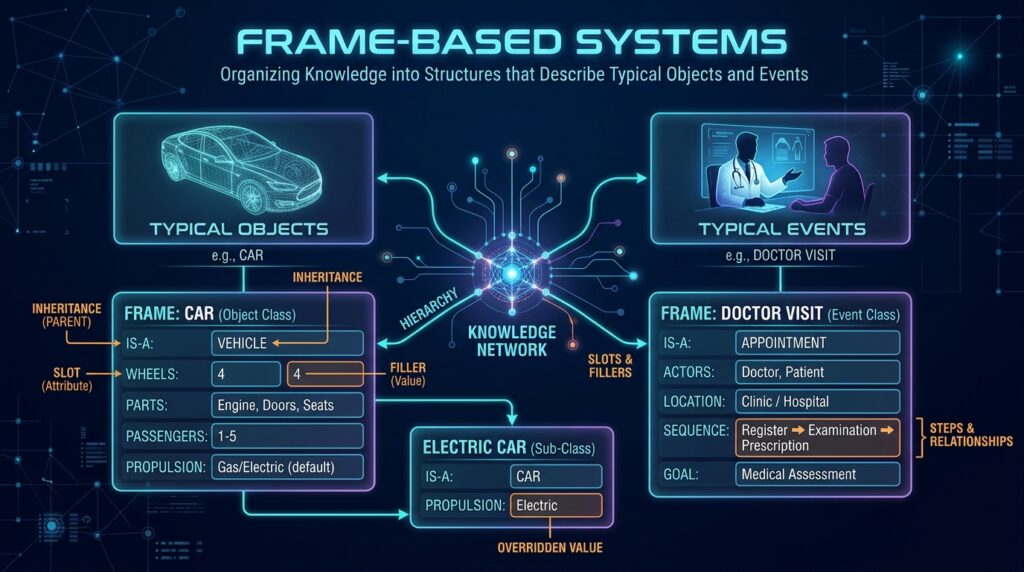

Frame based systems are a practical way to represent knowledge when you want an AI system to interpret everyday situations, not just store isolated facts. A frame is like a template for a typical object (for example, a laptop) or a typical event (for example, a restaurant visit). It lists the attributes you expect, along with defaults and simple rules for what to do when information is missing. If you are studying an artificial intelligence course in Mumbai, frames are a helpful starting point for understanding symbolic knowledge representation.
What a Frame Contains
A frame is made up of named fields, usually called slots. Each slot represents a property that matters for the concept you are modelling.
A “Restaurant Visit” frame might include slots such as: party size, reservation time, table type, order, payment method, and special requests.
Slots can hold a value (payment method = “card”), a default (tip = “optional”), and sometimes a constraint (party size must be positive). Many systems also allow a small action to run when a slot is filled or missing, which is useful for interactive assistants that need to ask the next best question.
The key benefit is focus. Instead of scanning the entire knowledge base for every new input, the system activates a relevant frame and knows which details to collect next.
Defaults and Inheritance: Reducing Repetition
Frames often form hierarchies, where specific frames inherit from general ones. A “Car” frame can inherit from a “Vehicle” frame. The “Vehicle” frame captures shared knowledge (has wheels, has a power source, carries passengers), while “Car” adds specific slots (boot size, transmission type). Inheritance reduces duplication and keeps knowledge consistent as the knowledge base grows.
Defaults matter just as much. Many user inputs are incomplete, and defaults let the system proceed while keeping assumptions explicit. If someone says, “I booked a table for two at 8 pm,” the system can assume the event includes ordering and paying later, even if those steps are not mentioned yet. In many modules of an artificial intelligence course in Mumbai, this is taught as controlled common sense: infer what is typical, but allow overrides when evidence suggests otherwise.
How Frame Based Reasoning Works: A Simple Workflow
Frame based systems usually reason in four steps:
- Recognise the situation and match it to a likely frame.
- Activate the frame (load the template).
- Fill slots with known details and mark what is unknown.
- Infer missing values using defaults, or ask targeted questions.
Example: a support chatbot receives, “My laptop battery drains in one hour.”
It activates a “Battery Issue” frame with slots for device age, recent changes, power settings, and usage pattern. It fills what it knows (symptom = rapid drain) and asks questions guided by missing slots: “How old is the laptop?” “Did this start after an update?” “Does it drain faster on video calls?” Based on the answers, it recommends a resolution path such as adjusting settings, checking background apps, running battery diagnostics, or planning a replacement.
The value is consistency. Similar complaints follow a similar questioning pattern, and the system can explain its steps by pointing to the filled slots and the defaults it used.
Strengths, Limitations, and Modern Relevance
Frame based systems are strong when you need structure and clear explanations. They are easier to audit than many purely statistical approaches because you can see which slots were observed, inferred, or defaulted.
They can struggle when the situation is unusual and does not match a “typical” template, or when multiple frames partially match and the system needs a reliable selection strategy. They also rely heavily on good knowledge engineering: messy hierarchies and weak defaults can create confusion.
Even so, the core idea remains relevant. Knowledge graphs, ontologies, and configuration models reuse the same pattern: represent an entity or event as a bundle of attributes plus constraints. Frames also work well in hybrid systems, where a language model can generate text while a frame structure ensures required fields are captured and validated—an approach often discussed in an artificial intelligence course in Mumbai focused on practical applications.
Conclusion
Frame based systems organise knowledge into reusable structures that describe typical objects and events. By modelling information as frames with slots, defaults, and inheritance, they help AI systems handle incomplete inputs, ask better questions, and explain decisions clearly. If you want assistants that feel organised rather than random, practising this approach—through projects or an artificial intelligence course in Mumbai—builds a solid foundation for reliable symbolic reasoning, and it complements data-driven techniques.