
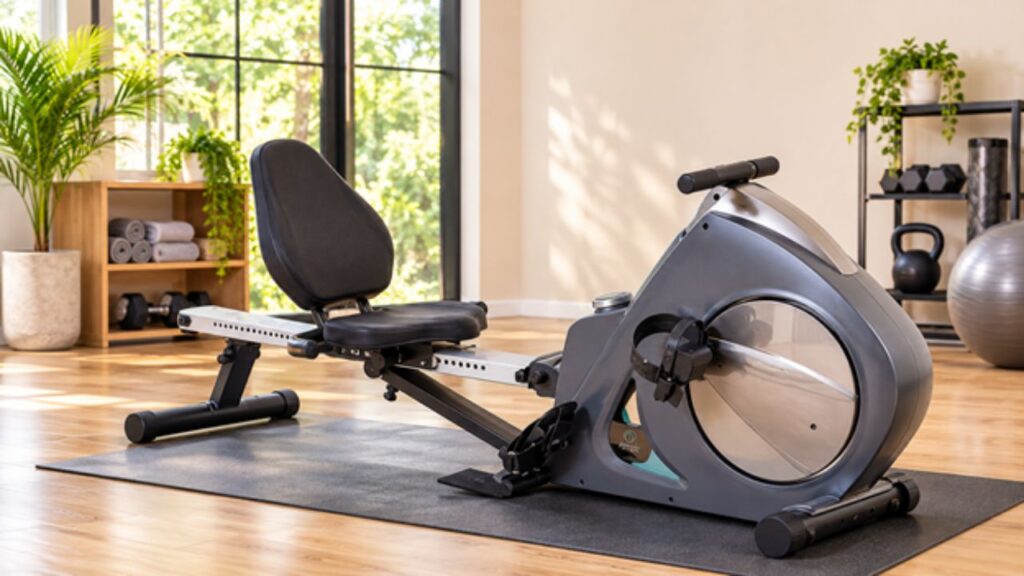

Losing weight doesn’t mean clocking hours on a treadmill or forcing yourself through workouts you can’t stand. Rowing is another way in. Your legs drive, your arms and back pull, your core holds it all together, and the effort stays steady from start to finish. If you want to build fitness while you manage your weight, that’s a handy mix.
Two things matter most. Technique, and a pace you can actually keep. Row too hard too soon and you’ll be flat on the floor by minute six. Sloppy form? Every session feels worse than it should. A sensible plan solves both, and it fits around a busy week.
Let’s discover how to use a rowing machine for weight loss.
How Does a Rowing Machine Help With Weight Loss?
Each stroke recruits a lot of muscle at once. Your legs push against the footplates. Your core stops you folding in half. Your arms finish the pull. Put that together and your heart rate climbs, and you burn energy the whole way through.
Weight loss still comes down to using more energy than you eat, day after day. Rowing can help you open that gap, especially when you add balanced meals and enough sleep.
Shopping around for home gear? Have a look at these rowing machines and cardio options and pick one that suits your fitness level and your floor space.
How to Use a Rowing Machine With Proper Form
Good technique makes rowing comfortable, and you get more from every session. Before you add speed or resistance, learn the whole stroke.
Follow the below four steps:
- Catch: Sit tall, knees bent, shins near vertical, arms reaching for the handle.
- Drive: Legs first. Push hard. Once they’ve straightened, swing back slightly from the hips and pull the handle to your lower ribs.
- Finish: Shoulders relaxed, wrists straight. Don’t lean far back.
- Recovery: Arms out, torso forward, then your knees bend and you glide back to the start.
It should flow as one movement, not four separate jobs. Let your legs do the heavy lifting early on, and don’t yank with your arms. A handy rule of thumb: the drive takes about half as long as the recovery. Go slowly at first and practise until the sequence feels natural. Any pain? Stop and check your form before you carry on.
Rowing Machine Workout Plan for Weight Loss
You don’t need to row flat out to make progress. Beginners can start short and add minutes as they get fitter. Two or three sessions a week is plenty to start with, with rest days in between if you need them. Once rowing feels easier, tack a few minutes onto the main block. When you’ve built a comfortable base, try short intervals. Pull firmly for 30 seconds, then ease off for 60 to 90. Repeat a few times, as long as your form holds. Aim for steady effort, not collapse. If your technique falls apart, slow down or stop.
Here’s a simple plan:
| Workout stage | Duration | Effort |
| Warm-up | 3 to 5 minutes | Easy, relaxed rowing |
| Main workout | 5 to 10 minutes | Steady, controlled pace |
| Cool-down | 3 to 5 minutes | Slow, gentle strokes |
How Often Should You Use a Rowing Machine?
It depends on how fit you are now, how well you recover, and what else you do during the week. A complete beginner needs shorter sessions than someone who already trains.
Start with workouts you can handle, then build up. Mix rowing with walking, cycling or strength work, so your muscles get a break from the same movement.
Check in with yourself after each session. Mild tiredness is normal. Soreness that hangs around, joint pain or fatigue that feels odd? Give yourself more recovery time.
One more thing. Exercise helps with weight loss, but it can’t pick where your body loses fat. What counts is what you do over months: your food, your sleep, and how active you are outside your workouts.
How to Choose the Best Rowing Machine for Home
The right machine fits your space, your budget and your goals. Before you buy, think about how often you’ll row and how much room you’ve got. Hunting for the best rowing machine for home? Compare these:
- Resistance type: Air rowers respond to how hard you pull. Magnetic models usually run quietly. Water rowers make a water-like sound.
- Size and storage: Check the full dimensions, and whether it folds away.
- Comfort: A seat that glides smoothly, secure footrests, a handle that feels good in your hands.
- Weight capacity: Check the manufacturer’s stated limit before buying.
- Display and settings: Simple readings for time, stroke rate and progress help you track things.
Eyeing a rowing machine for sale? Compare specifications. Price alone is a poor guide. You can browse rowers and cardio equipment to see different designs. The wider fitness equipment collection is worth a browse too. Comparing fitness equipment Melbourne retailers offer? Check delivery coverage, assembly requirements and extra charges before you order.
6 Common Rowing Machine Mistakes That Can Affect Your Workout
A few small fixes make workouts more comfortable and more effective.
- Pulling with your arms first: Start every stroke with your legs, then bring in your torso and arms.
- Rushing: Keep it controlled. A high stroke rate isn’t the goal.
- Setting resistance too high: More resistance doesn’t automatically mean better weight-loss results. Pick a level where your form holds.
- Skipping the warm-up: Easy strokes first, so your body is ready for the main session.
- Expecting quick results: Regular workouts and habits you can sustain beat watching the scale every day.
Make Rowing Part of Your Routine
Row consistently, eat sensibly, and a rowing machine can support your weight loss. Learn the technique first. Keep early sessions manageable. Push harder as your fitness grows.And choose a machine you feel comfortable on. A simple setup that fits your home and routine makes it easier to turn up. One session at a time.