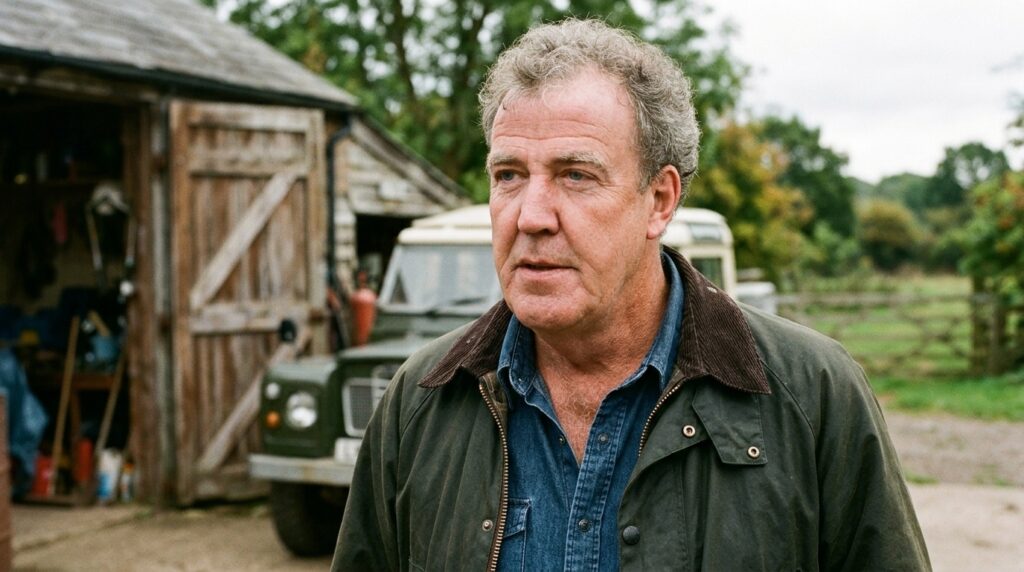

Picture a lanky Yorkshire teenager, freshly expelled from boarding school, selling Paddington Bear toys for his parents while dreaming of engines and open roads. Decades later, that same man stands in a Cotswolds field, tractor keys in one hand and a television empire in the other, having turned blunt honesty and a love of cars into one of the most recognisable voices in British media. Jeremy Clarkson’s life story and wealth reveal a path defined by reinvention, sharp wit, and an ability to bounce back stronger after every setback.
Essential Profile Summary
| Field | Details |
|---|---|
| Legal Full Name | Jeremy Charles Robert Clarkson |
| Common Alias / Professional Name | Jeremy Clarkson, Jezza |
| Birth Date | 11 April 1960 |
| Current Age | 66 |
| Place of Origin | Sprotbrough, near Doncaster, West Riding of Yorkshire, England |
| Citizenship | British |
| Primary Professions | Television presenter, journalist, author, farmer, entrepreneur |
| Signature Achievements | Transforming Top Gear into a global hit; co-creating The Grand Tour; building Clarkson’s Farm into a Prime Video success; hosting Who Wants to Be a Millionaire? |
| Physical Stature | 6 ft 5 in (1.96 m), tall and imposing build |
| Relatives / Partner(s) | Partner: Lisa Hogan (since 2017); Children: Emily, Finlo, and Katya (with former wife Frances Cain); Sister: Joanna |
| Academic Background | Hill House School, Doncaster; Repton School (expelled before A-levels); honorary Doctor of Engineering |
| Online Presence Metrics | Instagram (@jeremyclarkson1): around 11.5 million followers; X (@JeremyClarkson): around 7.5 million followers |
| Philanthropic Involvement | Patron of Help for Heroes; supports prostate cancer awareness, farming mental health charities, Great Ormond Street Hospital, and various rural causes |
| Approximate Wealth | Estimated $80 million (around £60–65 million); figures are approximate based on public reports |
Formative Years and Roots
Jeremy Clarkson grew up in a modest Yorkshire home where money was tight. His father, Edward, worked as a travelling salesman, while his mother, Shirley, taught. The family struggled until Shirley began making stuffed Paddington Bear toys for her children. The toys proved so popular that the Clarksons secured a licence and turned the idea into a thriving business. Those early sales funded private schooling and planted an entrepreneurial seed.
At Repton School, Clarkson faced bullying and struggled with authority. He was eventually expelled for smoking, drinking, and general disruption. Rather than university, he returned home and sold Paddington toys as a travelling salesman. The experience taught him resilience and the value of a good story. Local journalism soon called. He started at the Rotherham Advertiser and later wrote for other regional papers. In 1984 he co-founded the Motoring Press Agency, syndicating sharp car reviews that stood out from the usual polite coverage. That direct style became his trademark.
Professional Evolution and Triumphs
Breakthrough on the small screen
A chance meeting at a car launch in the late 1980s led to a screen test for the original Top Gear. Clarkson joined in 1988 and helped shift the programme from a dry magazine format toward something more entertaining. He left in 1999, then returned in 2002 for the relaunch that turned Top Gear into a worldwide phenomenon. Alongside Richard Hammond and James May, he mixed serious road tests with absurd challenges, studio banter, and memorable one-liners. The show became one of the BBC’s biggest exports.
The Grand Tour era
After a well-publicised exit from the BBC in 2015, Clarkson, Hammond, and May signed a major deal with Amazon. The Grand Tour delivered high-production adventures, exotic locations, and the same chemistry that had defined their earlier work. Reports put the overall production deal in the region of £160 million, with Clarkson earning a substantial annual share.
Clarkson’s Farm and beyond
In 2019 Clarkson took over the day-to-day running of his 1,000-acre Oxfordshire farm, Diddly Squat. The resulting Amazon series Clarkson’s Farm showed the messy reality of modern British farming: weather disasters, planning battles, livestock losses, and occasional triumphs. Viewers connected with the honesty. The farm shop, Hawkstone lager (made with barley grown on the land), and the nearby pub The Farmer’s Dog turned the property into a destination. Clarkson also hosts the revived Who Wants to Be a Millionaire? on ITV and continues writing weekly columns for The Sunday Times and The Sun. He has published numerous bestselling books that mix car stories, opinion, and farm diaries.
Intimate Sphere and Connections
Clarkson was married briefly to Alexandra James in 1989. He married talent manager Frances Cain in 1993; they had three children (Emily, Finlo, and Katya) before divorcing in 2014. Since 2017 he has been with Irish former model and artist Lisa Hogan, who appears regularly on Clarkson’s Farm. The couple live on the Oxfordshire estate. Clarkson is a grandfather through Emily. He has spoken openly about the quieter pleasures of farm life, walking the fields, and spending time with family after years of constant travel.
Wealth Breakdown and Economic Insights
Public estimates place Jeremy Clarkson’s net worth at around $80 million (roughly £60–65 million) as of 2026. These figures come from sources such as Celebrity Net Worth and various UK financial trackers; Clarkson has not published audited personal accounts, so the numbers remain informed approximations.
Major revenue streams include:
- Long-running television contracts and production stakes (notably through companies linked to Top Gear and The Grand Tour)
- Amazon deals for The Grand Tour and Clarkson’s Farm
- Fees from hosting Who Wants to Be a Millionaire?
- Newspaper columns and book royalties
- Farm-related businesses: the Diddly Squat shop, Hawkstone drinks, and The Farmer’s Dog pub
- Real estate, primarily the Cotswolds farm and associated land
Clarkson has historically taken equity positions rather than relying solely on salaries. Early ownership in Top Gear commercial rights produced significant dividends and a substantial buyout payment. The farm businesses have grown from a near-zero first-year profit into popular tourist and retail operations. Classic cars and other personal assets form a smaller but visible part of the portfolio. Annual earnings in recent years have been estimated in the low-to-mid tens of millions of pounds when television, writing, and brand activities are combined.
Challenges and Comebacks
Clarkson’s career has never been smooth. Controversies over on-air remarks, a 2015 incident that ended his BBC tenure, planning disputes with local councils over the farm, and health scares have all tested him. In 2025 he was diagnosed with an aggressive form of prostate cancer after a routine check. Treatment, including high-intensity focused ultrasound, proved successful; by mid-2026 he announced he was in remission and used the platform to urge other men to get tested. The openness sparked a sharp rise in visits to prostate cancer risk-checker tools. Earlier heart issues also required intervention. Each time, Clarkson returned to work with the same directness that first made him famous.
Cultural Influence and Enduring Mark
Clarkson helped redefine how cars are discussed on television, making technical knowledge entertaining for a mass audience. Top Gear and The Grand Tour inspired similar formats around the world. Clarkson’s Farm has drawn attention to the practical and economic pressures facing British farmers, while his columns and books keep a distinctive, often contrarian voice in national conversation. His decision to share a cancer diagnosis publicly encouraged thousands of men to seek checks, showing how a high-profile story can produce tangible public-health benefits.
FAQs
What drives Jeremy Clarkson’s success?
A combination of genuine enthusiasm for machines, an ability to tell stories without jargon, and a willingness to speak plainly even when it causes friction. He turns ordinary frustrations into shared comedy and keeps reinventing the format rather than repeating old tricks.
Key controversies they have faced?
Outspoken comments that offended various groups, the 2015 producer incident that led to his BBC departure, and ongoing local planning battles over farm developments. Clarkson has rarely retreated from the resulting debates.
Their most impactful contributions?
Popularising motoring television on a global scale and, more recently, giving mainstream viewers an unfiltered look at modern farming. The prostate-cancer awareness that followed his diagnosis stands as a clear public service.
Future endeavours?
Further seasons of Clarkson’s Farm, continued hosting of Who Wants to Be a Millionaire?, expansion of the Hawkstone and farm-shop brands, and more writing. Health permitting, he shows no sign of slowing down.
You May Also Like: Devlin Hodges Net Worth: The Underdog Journey from Alabama Fields to NFL Lights and Beyond