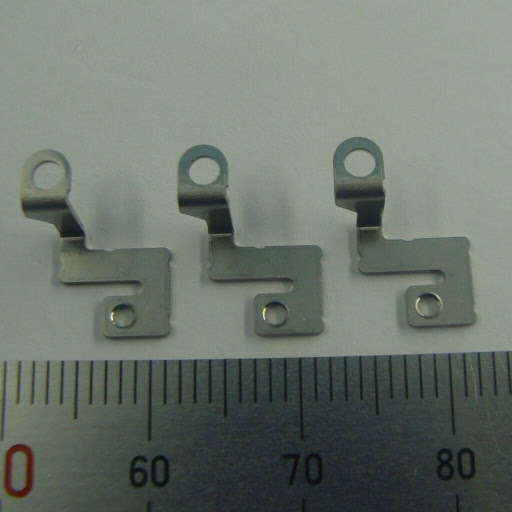

Precision stainless steel stamping parts produces metal components with carefully controlled shapes, dimensions, and surface characteristics. It is used when parts must fit accurately into assemblies and maintain consistent quality across repeated production runs.
The process uses presses and custom dies to cut and form stainless steel sheets or strips. With suitable material selection, tooling design, and process monitoring, manufacturers can produce components for applications that demand repeatability and reliable performance.
What Makes Stamping Precise?
Precision depends on several connected factors. The material must have consistent thickness and mechanical properties, the die must be manufactured accurately, and the press must operate within the required process limits.
The part drawing also plays an important role. Critical dimensions, tolerances, hole positions, flatness, and bend angles should be clearly specified. If tolerances are unnecessarily tight, manufacturing costs may increase without providing a practical benefit.
Precision should therefore be defined according to the component’s function and assembly requirements rather than a single universal tolerance.
Challenges of Stainless Steel Forming
Stainless steel offers useful corrosion resistance, but its forming behavior can make stamping more demanding than working with some other sheet metals.
Work hardening occurs when the material becomes harder as it is deformed. This can affect later forming operations and increase tool loads. Springback can also cause a formed section to move slightly toward its original shape after the forming force is removed.
Tool wear, galling, and surface marking are additional concerns. Manufacturers may need suitable tool materials, controlled clearances, appropriate lubrication, and polished forming surfaces to achieve consistent results.
The specific approach depends on the grade, material thickness, geometry, and production conditions.
Material and Tooling Selection
The stainless steel grade should be selected according to corrosion exposure, strength, formability, and finish requirements. Grade 304 is frequently used for general-purpose components, while grade 316 may be considered for more demanding corrosive environments. Other grades may be appropriate when their properties better match the design.
Tooling must be developed around the chosen material and final geometry. Punches, dies, guides, and stripping systems need to maintain alignment throughout the stamping cycle.
For high-volume production, progressive tooling can perform multiple operations as the strip moves through successive stations. This approach can improve throughput and reduce repeated handling, provided the component design and order quantity justify the tooling investment.
Designing for Manufacturability
A good design balances functional requirements with production practicality. Engineers should avoid unnecessary geometric complexity and provide reasonable bend radii wherever the application allows.
Hole locations need careful attention because nearby bends or edges can distort the material during forming. The appropriate distance depends on thickness, grade, tooling, and geometry.
Designers should also consider burr direction, edge conditions, grain orientation, and the effect of springback. Reviewing these details with the stamping supplier before tooling begins can reduce the need for later modifications.
Inspection and Quality Control
Precision stamping requires a documented approach to inspection. Initial checks can verify the material grade, thickness, and incoming surface condition. During production, measurements should focus on dimensions that affect function and assembly.
Calipers, gauges, optical measuring equipment, and coordinate measuring machines may be used depending on the part’s complexity and tolerances. Visual inspection can identify scratches, burrs, cracks, wrinkles, and other surface or forming defects.
For parts with special requirements, manufacturers may also need material certificates, traceability records, functional tests, or specific corrosion testing. The inspection plan should be agreed upon before mass production.
Surface Finishing
Finishing can improve safety, appearance, cleanability, or corrosion performance, depending on the application.
Deburring removes sharp edges left by cutting. Polishing or brushing creates a specified surface appearance, while passivation can help maintain the protective passive layer of stainless steel after suitable processing.
Not every component needs every treatment. Finishing should be selected according to the drawing, operating environment, and applicable standards. Parts should also be handled and packaged in a way that prevents scratches or contamination before delivery.
Reducing Production Costs
Precision does not have to mean unnecessary expense. Manufacturers can reduce avoidable costs by reviewing the design before tooling, using realistic tolerances, selecting a suitable grade, and minimizing secondary operations.
Production volume is another major consideration. Tooling may require a substantial initial investment, but a validated process can spread that cost across many parts. For smaller orders, a simpler tool arrangement may be more economical.
Early sample approval and clear communication between the buyer and supplier can also reduce rework, material waste, and delays.
Selecting a Manufacturing Partner
When evaluating a stamping supplier, buyers should review its experience with the relevant stainless steel grades, tooling capabilities, inspection equipment, and production volumes.
Request a quotation based on a complete technical drawing. Include material specifications, thickness, quantity, finishing requirements, critical tolerances, and packaging expectations.
Ask how first-article approval, ongoing inspections, nonconforming parts, and engineering changes are managed. Clear answers help establish whether the supplier can meet the project’s practical requirements.
Conclusion
Precision stainless steel stamping parts is a valuable manufacturing method for components that require repeatable geometry and reliable material performance. Success depends on understanding stainless steel’s forming behavior, designing suitable tooling, and maintaining effective quality control.
With careful planning and a capable manufacturing partner, businesses can produce precision stamped parts that meet their application needs while balancing quality, production efficiency, and cost.