
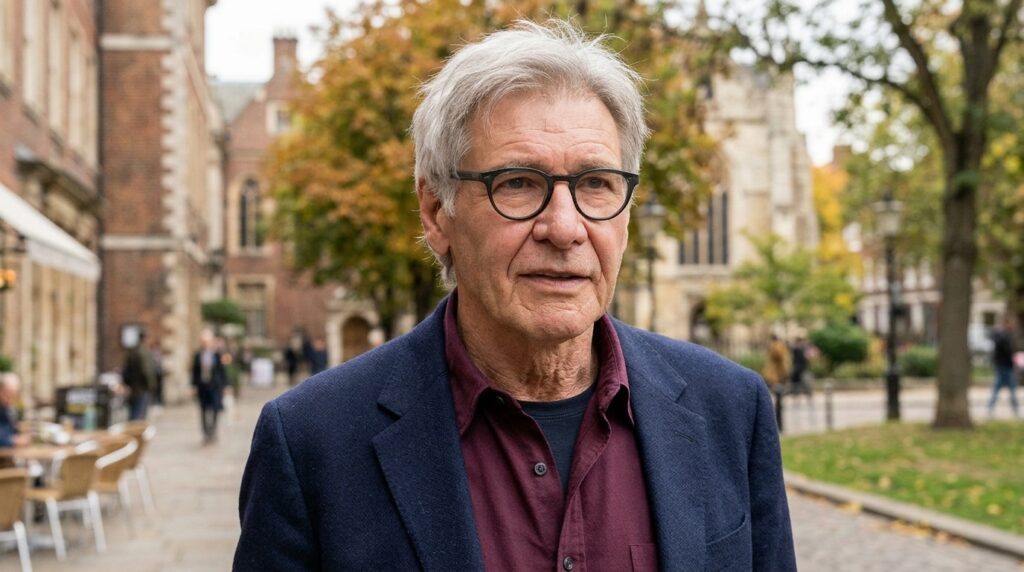

In a quiet moment during his 2026 SAG-AFTRA Life Achievement Award speech, Harrison Ford stood on stage and reflected on a career that still feels unfinished. “It’s a little early, isn’t it? I’m still a working actor,” he said with characteristic dry humor. Decades earlier, the same man had measured wood, built cabinets, and wondered whether acting would ever pay the bills. That journey from struggling craftsman to global icon forms the heart of the Harrison Ford life story and wealth narrative: a tale of persistence, transformative roles, and quiet resilience that continues to inspire.
Essential Profile Summary
| Field | Details |
|---|---|
| Legal Full Name | Harrison Ford |
| Common Alias / Professional Name | Harrison Ford |
| Birth Date | July 13, 1942 |
| Current Age | 84 (as of 2026) |
| Place of Origin | Chicago, Illinois, USA |
| Citizenship | American |
| Primary Professions | Actor, producer, licensed pilot |
| Signature Achievements | Han Solo (Star Wars franchise), Indiana Jones (franchise), Oscar nomination for Witness (1985), AFI Life Achievement Award, Cecil B. DeMille Award, SAG-AFTRA Life Achievement Award (2026) |
| Physical Stature | 6 ft 1 in (1.85 m), solid athletic build |
| Relatives / Partner(s) | Married to Calista Flockhart (since 2010); previously married to Mary Marquardt (1964–1979) and Melissa Mathison (1983–2004); five children (Benjamin, Willard, Malcolm, Georgia, and adopted son Liam) |
| Academic Background | Attended Ripon College (English and philosophy); left before graduation |
| Online Presence Metrics | Limited personal social media; strong public recognition through film archives and official franchise channels |
| Philanthropic Involvement | Vice chair of Conservation International since 1991; aviation-related rescue support and environmental advocacy |
| Approximate Wealth | Estimated $300–350 million (based on public film salaries, residuals, and real estate) |
Formative Years and Roots
Harrison Ford was born in Chicago to Dorothy (née Nidelman), a former radio actress of Russian-Jewish heritage, and John William “Christopher” Ford, an advertising executive with Irish and German roots who had worked in vaudeville and radio. He grew up in the suburbs of Des Plaines and Park Ridge, Illinois. School was not a highlight: he was a quiet student, faced bullying, and rarely rose above average grades. He found some purpose in Boy Scouts (reaching Life Scout rank) and as a sportscaster on his high school radio station.
At Ripon College in Wisconsin he studied English and philosophy. Feeling isolated and struggling academically, he took a drama class late in his college years. The experience clicked. Storytelling and performance offered an identity he had not found elsewhere. He left school just before graduation and headed west with his first wife, Mary Marquardt, determined to try acting.
In Los Angeles he signed a modest studio contract, earned small television and film parts, and quickly learned that steady work was scarce. To support a young family he taught himself carpentry. For roughly fifteen years he balanced occasional acting jobs with building work. The period demanded patience and practical skill. It also shaped a grounded approach that never fully left him.
Professional Evolution and Triumphs
Ford’s early film appearances included an uncredited role in Dead Heat on a Merry-Go-Round (1966) and supporting parts in American Graffiti (1973) for George Lucas and The Conversation (1974) for Francis Ford Coppola. The breakthrough arrived in 1977 when Lucas cast him as Han Solo in Star Wars. The film became a cultural phenomenon. Ford returned for the sequels and later installments, creating one of cinema’s most enduring characters.
Four years later Steven Spielberg and Lucas brought him the role of archaeologist-adventurer Indiana Jones in Raiders of the Lost Ark (1981). The franchise continued across decades, with Ford still playing the character into the 2020s. Other defining performances followed: Rick Deckard in Blade Runner (1982) and its sequel, the Oscar-nominated turn in Witness (1985), Jack Ryan in Tom Clancy adaptations, and the determined doctor in The Fugitive (1993). Later work included 42, The Call of the Wild, television series such as 1923 and Shrinking, and a role in the Marvel film Captain America: Brave New World (2025).
Honors accumulated over time: an Academy Award nomination, multiple Golden Globe nominations, the AFI Life Achievement Award, the Cecil B. DeMille Award, and the 2026 SAG-AFTRA Life Achievement Award. Ford’s career demonstrates longevity built on selective choices and consistent professionalism rather than constant reinvention.
Intimate Sphere and Connections
Ford has been married three times. His first marriage to college sweetheart Mary Marquardt produced sons Benjamin (a chef and restaurateur) and Willard. The second marriage, to screenwriter Melissa Mathison (writer of E.T.), brought son Malcolm and daughter Georgia. In 2010 he married actress Calista Flockhart; he later adopted her son Liam. The family has largely stayed out of the spotlight, reflecting Ford’s preference for privacy.
Away from sets he is an accomplished pilot who has flown search-and-rescue missions and supports aviation-related charities. He maintains a large ranch in Jackson Hole, Wyoming, where he has donated land for conservation, and a home in Los Angeles. Daily life favors simplicity, outdoor activity, and time with family when schedules allow. Wellness for him appears tied to purposeful work, flying, and environmental engagement rather than public fitness routines.
Wealth Breakdown and Economic Insights
Public estimates place Harrison Ford’s net worth in the range of $300 million to $350 million as of 2026. These figures are approximations drawn from reported salaries, box-office participation, residuals, and known real-estate holdings. They are not audited personal financial statements.
Major income streams have included:
- Franchise salaries and backend points from Star Wars and Indiana Jones (early modest pay for the original Star Wars grew into substantial later deals, including a reported high eight-figure sum for one Indiana Jones installment).
- Leading-role fees in the $10–25 million range during peak commercial years of the 1990s and 2000s.
- Residuals and licensing from enduring catalog titles.
- Television work in recent years.
- Real estate, including properties in California and the Wyoming ranch.
Ford’s approach to wealth has been pragmatic. He built financial stability first through carpentry, then through careful contract negotiation once stardom arrived. He has avoided heavy public endorsement campaigns, focusing instead on the long-term value of iconic roles and selective projects. The result is a substantial but privately managed fortune that supports both lifestyle and philanthropic commitments.
Challenges and Comebacks
The early years brought repeated rejection and financial pressure. Studio contracts ended without major roles. Carpentry became both livelihood and temporary identity. Later, the intensity of location shooting contributed to the end of his first marriage. Physical demands of action roles and occasional aviation incidents tested resilience. Ford has spoken openly about periods of isolation and the long wait for meaningful work. His response was steady application rather than dramatic reinvention. The same work ethic that measured lumber later measured performance opportunities. That continuity turned setbacks into foundation.
Cultural Influence and Enduring Mark
Harrison Ford helped define the modern action-adventure hero: resourceful, skeptical, and ultimately principled. Han Solo and Indiana Jones remain cultural touchstones across generations. His environmental advocacy through Conservation International has given him a platform beyond entertainment. As a pilot and land steward he models practical commitment to conservation. Younger audiences continue to discover his work through streaming and franchise returns, while older viewers recognize a consistent screen presence that rarely sought the spotlight for its own sake. His career illustrates that lasting impact often grows from craftsmanship applied over decades.
FAQs
What drives Harrison Ford’s success?
Persistence paired with selectivity. He spent fifteen years refining skills between carpentry and small roles, then chose projects that suited his strengths once opportunity arrived. Collaboration with directors such as Lucas and Spielberg amplified those strengths.
Key challenges he has faced?
Prolonged early career uncertainty, the strain of balancing family and location work, and the physical demands of action filmmaking. He has addressed them through practical problem-solving and continued professional engagement.
His most impactful contributions?
Creating two of the most recognizable characters in film history, elevating adventure storytelling, and sustained environmental advocacy through Conservation International.
Future endeavors?
At 84 he remains active in film and television. Recent awards speeches emphasize that he still considers himself a working actor. Projects and conservation work continue to shape his schedule.
How has he built lasting wealth?
Through iconic franchise participation, strong backend deals on major films, residuals from a deep catalog, and real-estate holdings, managed with the same practicality that once supported him as a carpenter.
You May Also Like: Bill Ackman and Tiger Woods Life Story and Wealth: Parallel Paths to Greatness