
Picture this: you are cruising at 37,000 feet on a transatlantic flight from Barcelona to Chicago, halfway through a nine-hour journey, when the pilots suddenly declare an emergency and turn toward London. That is exactly what happened on United Airlines Flight UA770 on May 27, 2025. The Boeing 787-9 Dreamliner diverted safely to Heathrow after a cabin pressurization system alert. No one was hurt. Everyone walked off the plane. Yet the episode still offers a clear window into how modern airlines, pilots, and cabin crews handle in-flight alerts and emergency diversions.
This was not a security threat or passenger incident. It was a technical caution that the crew treated with the seriousness it deserved. The story of UA770 shows why commercial aviation remains one of the safest ways to travel: layered systems, rigorous training, and a culture that prioritizes caution over schedule.
What Happened on Flight UA770
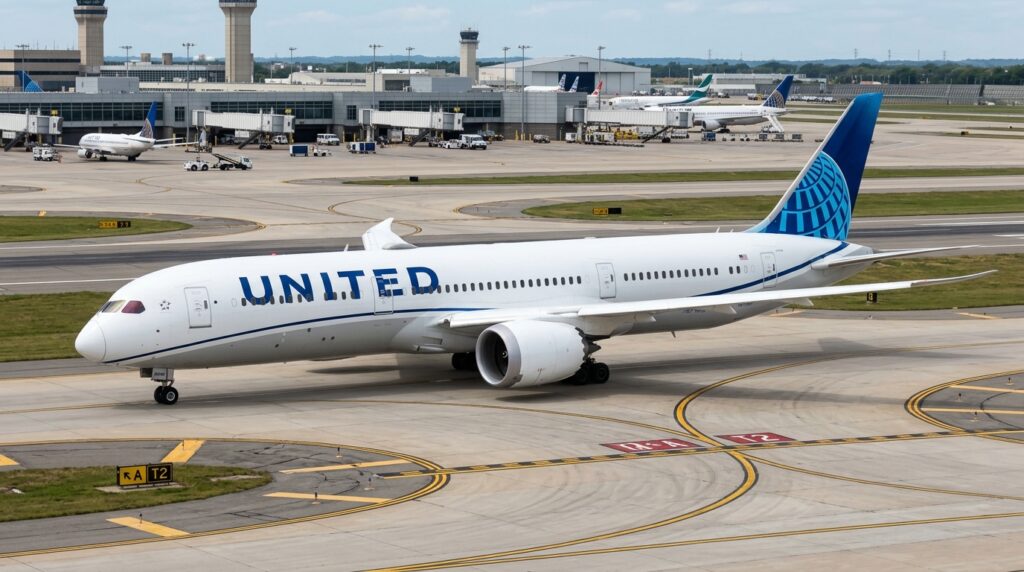
United Airlines Flight UA770 left Barcelona-El Prat Airport bound for Chicago O’Hare. The aircraft was a Boeing 787-9, registration N26902, carrying roughly 257 passengers and 12 crew members. About 90 minutes after departure, while at cruising altitude over European airspace, the flight deck received a caution related to the cabin pressurization system.
This was not a sudden loss of pressure. Oxygen masks stayed in their overhead compartments. Passengers felt no change in the cabin environment. Still, the monitoring systems flagged an irregularity, most likely involving sensors or outflow valves that help regulate cabin air pressure. At high altitude, even a potential issue demands immediate attention because the outside atmosphere cannot support normal breathing.
The pilots followed standard procedure. They entered the universal emergency transponder code 7700, which instantly signals air traffic control that the flight needs priority handling. Controllers cleared a path, and the crew elected to divert to London Heathrow rather than continue across the Atlantic. The plane landed on Runway 27R around 4:55 p.m. BST, taxied under its own power to Gate B44, and emergency vehicles stood by only as a precaution. All occupants disembarked without injury.
United later coordinated inspections with Boeing and notified both the UK Civil Aviation Authority and the U.S. Federal Aviation Administration. By late summer 2025, the airline reported no recurrence of similar alerts on that aircraft and no lasting health effects among those on board.
Why Cabin Pressurization Alerts Matter
Commercial jets fly so high that the air outside is too thin for people to breathe comfortably. The pressurization system keeps the cabin at an equivalent altitude of roughly 6,000 to 8,000 feet. Sensors constantly monitor pressure, temperature, and related components. A caution light does not always mean the system has failed. It can indicate a sensor glitch, a valve responding outside normal parameters, or the early stages of a real problem.
Crews treat these alerts conservatively, especially over water. Continuing a long oceanic crossing with an unresolved indication would leave fewer diversion options. Descending to a lower altitude where the outside air is denser and landing at a well-equipped airport is the safer choice. On UA770 the crew executed exactly that plan: controlled descent, clear communication with air traffic control, and a normal landing.
Think of it like a car’s check-engine light on a long highway drive. You do not ignore it and hope for the best. You pull over at the next reliable service area, even if the car still seems fine.
How Pilots and Crews Coordinate an Emergency Diversion
Once the alert appeared, the sequence followed well-rehearsed steps. Pilots run the applicable checklist from the aircraft’s quick-reference handbook. They declare the emergency with the 7700 squawk so every radar controller in the area sees the priority status. Air traffic control then provides direct routing, altitude clearances, and coordination with the destination airport.
Cabin crew receive a briefing from the flight deck. They prepare the cabin, secure loose items, and keep passengers informed with calm, factual updates. On UA770, passengers later described initial tension that eased once the captain explained the situation and the crew moved through the aisles with steady reassurance. No masks deployed, no rapid decompression occurred, and the descent remained controlled.
At Heathrow, fire and rescue teams positioned near the runway as standard practice for any declared emergency. The aircraft needed no special assistance after touchdown. Maintenance teams began examining the pressurization system, comparing flight data with maintenance records, inspecting valves and sensors, and running functional tests before the plane returned to service.
Broader Aviation Safety Protocols That Protect Passengers
The UA770 diversion illustrates several layers of commercial aviation safety that operate every day, whether the trigger is technical or something else.
Aircraft systems include multiple redundancies. The Boeing 787 uses advanced health-monitoring that streams data in real time. Crews train regularly in simulators on pressurization failures, smoke, fire, medical events, and security scenarios. These sessions build the muscle memory that lets pilots and flight attendants act quickly without panic.
Air traffic control procedures give priority to any flight squawking 7700. Controllers clear surrounding traffic, arrange expedited paths, and alert airport emergency services. Airports such as Heathrow maintain dedicated response teams and long runways capable of handling wide-body aircraft at any hour.
Passenger care protocols kick in after landing. United arranged hotels, meal vouchers, rebooking on later flights, and assistance through immigration. Travelers with medical needs or tight connections received priority help. These steps reduce the disruption that an unplanned landing inevitably creates.
Security-related events follow parallel but distinct paths. If a crew member observes a potential threat, the cockpit is secured, law enforcement is notified, and the aircraft may divert or return to the departure airport. Recent examples on other United flights have shown crews locking down the flight deck and coordinating quietly with authorities while keeping the rest of the cabin calm. The same professional calm that handled UA770’s technical alert applies when the concern is human rather than mechanical.
Federal and international oversight remains constant. The FAA, European counterparts, and manufacturers review data from every significant event. Findings feed back into maintenance programs, training curricula, and system design improvements. Over decades this continuous loop has driven the industry’s strong safety record.
What Passengers Experienced and How United Responded
Many onboard felt the usual mild anxiety that comes with any change in plans. Clear announcements and visible crew presence kept the atmosphere orderly. Once on the ground, United’s ground staff guided people through the terminal, helped locate bags for overnight stays, and worked to get everyone onto alternative flights as quickly as possible.
The airline’s public statements emphasized passenger safety and the professionalism of the crew. No medical emergencies arose from the diversion itself. The aircraft underwent thorough checks focused on the environmental control system before returning to the schedule.
For frequent flyers the episode is a reminder that diversions, while inconvenient, are usually the result of caution rather than catastrophe. Airlines would rather land early and inspect than risk continuing with an unresolved indication.
Lessons for Air Travelers
First, listen carefully to crew announcements. The information they share is accurate and intended to keep everyone safe and informed. Second, keep essential items (passport, medications, phone charger, a change of clothes) in your carry-on. Unplanned landings can mean overnight stays. Third, understand that a declared emergency does not automatically equal danger. In most cases it means the system is working exactly as designed: detecting an anomaly and giving the crew time and space to resolve it on the ground.
Aviation safety is not the absence of problems. It is the presence of robust procedures that turn potential problems into managed events. UA770 demonstrated those procedures in action.
The next time you board a long-haul flight, remember that the same training, systems, and coordination that brought Flight UA770 safely to Heathrow operate on every commercial jet. Crews practice for the rare alerts so that ordinary passengers can trust the ordinary flight.
Have you ever been on a diverted flight? What helped you stay calm, or what questions still linger about how airlines handle these moments? Share your experience in the comments. Safe travels.
Frequently Asked Questions
What happened on United Airlines Flight UA770?
On May 27, 2025, United Airlines Flight UA770 was flying from Barcelona to Chicago when the crew detected a cabin pressurization system alert at about 37,000 feet. The pilots declared an emergency with the 7700 squawk code and diverted the Boeing 787-9 to London Heathrow. The plane landed safely on Runway 27R around 4:55 p.m. BST with no injuries reported among the roughly 257 passengers and 12 crew members.
Why did UA770 divert to London Heathrow?
The crew received a caution related to the cabin pressurization system. Even though no actual loss of pressure occurred and oxygen masks stayed stowed, aviation procedures require treating any such alert seriously, especially over open water. Heathrow was the nearest major airport with full emergency and maintenance support, so the pilots chose to land there rather than continue the long Atlantic crossing.
Was anyone injured during the UA770 emergency diversion?
No. All passengers and crew walked off the aircraft without injury. United reported no lasting health effects, and the landing was uneventful. Emergency vehicles stood by only as a standard precaution.
What caused the emergency on Flight UA770?
A suspected cabin pressurization anomaly triggered a caution alert on the flight deck. This type of warning can stem from a sensor irregularity, outflow valve issue, or related system reading outside normal parameters. It was not a sudden decompression. The crew followed standard checklists and diverted as a precaution.
Did the oxygen masks deploy on UA770?
No. Oxygen masks remained in their overhead compartments the entire time. Passengers experienced no change in cabin pressure or environment. The diversion was a proactive response to a system alert rather than an active loss of pressurization.
How did United Airlines handle passengers after the diversion?
United arranged hotel rooms for those who needed overnight stays, issued meal vouchers, helped with rebooking on later flights, and assisted passengers through immigration at Heathrow. Ground teams prioritized people with medical needs or tight connections. The aircraft itself underwent detailed inspections focused on the pressurization system before returning to service.
Is it common for flights to divert over pressurization alerts?
Pressurization-related diversions are uncommon but not rare. Modern aircraft constantly monitor these systems, and crews are trained to treat any caution conservatively. The UA770 event followed textbook emergency procedures and ended with a safe, controlled landing, reinforcing why such alerts lead to early diversions rather than continued flight.
You May Also Like: Delta Flight DL275 Diverted LAX: Passenger Rights Guide