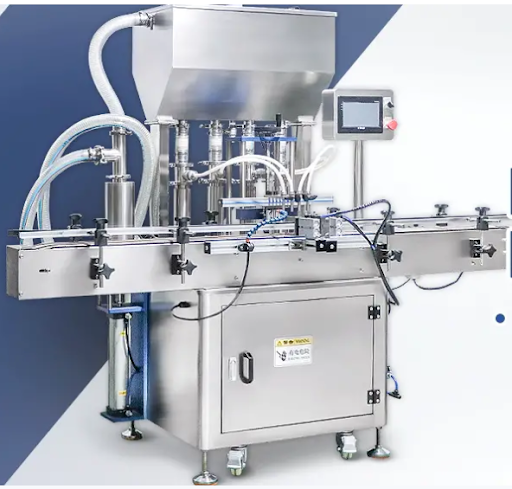

A careful evaluation of product requirements, container formats, and operating conditions helps businesses choose a machine that suits their production needs.
Understand Your Product
Begin by identifying the product’s physical properties. Consider whether it is a thin liquid, thick paste, powder, granule, or material containing solid particles.
Viscosity, temperature, foaming behavior, particle size, and chemical compatibility can influence the filling technology required. A machine designed for water-like liquids may not work well with a thick sauce or abrasive industrial material.
Providing accurate product information to the supplier helps narrow down the available options. For unusual products, a practical test can reveal issues that specifications alone may not identify.
Calculate Production Requirements
Estimate the number of containers the business needs to fill per hour, shift, or day. Include time for cleaning, product changes, routine inspections, and other interruptions when calculating realistic output.
Consider future expansion as well. If demand is expected to increase, the machine should offer a practical path to higher production without requiring an immediate replacement.
At the same time, purchasing equipment with excessive capacity may increase the initial investment and operating costs. A balanced approach considers both current needs and realistic future demand.
Check Container Sizes and Shapes
List the container sizes, materials, shapes, and opening dimensions that the machine must support. Ask whether adjustments or interchangeable components are needed for different packaging formats.
Businesses that frequently change products should pay attention to changeover time. Easy adjustment and straightforward cleaning can reduce the time required between production runs.
The machine should also be compatible with existing conveyors, capping equipment, labeling systems, and other packaging machinery.
Compare Total Operating Costs
The purchase price does not represent the full cost of ownership. Installation, operator training, maintenance, spare parts, energy use, cleaning, and downtime can all affect long-term expenses.
Ask suppliers about warranty coverage, technical support, replacement-part availability, and service response times. A machine with reliable support may provide better value than a cheaper alternative that is difficult to maintain.
Where possible, request a demonstration using the actual product and container. This can help verify performance before a final purchasing decision.
Review Safety and Cleaning Requirements
The equipment should include suitable protective guards, emergency stops, and controls for its intended working environment. Cleaning access and product-contact materials should also match the application.
Businesses working with food, pharmaceuticals, cosmetics, or chemicals should confirm the relevant hygiene, material compatibility, and regulatory requirements before ordering.
Make an Informed Decision
Compare shortlisted machines using consistent criteria, including product compatibility, filling accuracy, production capacity, changeover time, maintenance requirements, and supplier support.
The best automatic filling machine is not necessarily the fastest or least expensive model. It is the one that reliably meets the business’s actual requirements and can be maintained safely over its working life.